Finding your purpose in life is not always about discovering one perfect answer. Instead, it can be a process of asking better questions, learning from experience, understanding yourself more deeply, and becoming intentional about the way you live and lead.
For entrepreneurs and business leaders, that process can become especially important. After all, building a successful business involves more than strategy, revenue, and execution. Over time, the person leading the business also has to grow.
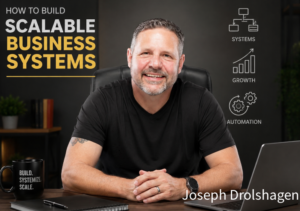
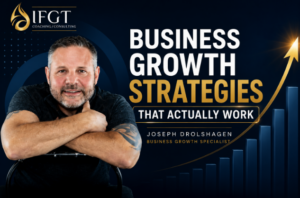
That idea has been central to Joseph Drolshagen’s work as a coach.
With more than 28 years of corporate experience, including reaching the level of VP of Sales, Joseph brings together leadership experience, business growth strategy, mindset work, and personal development. His current coaching work focuses on helping entrepreneurs and professionals identify barriers, improve decision-making, strengthen leadership, and create sustainable growth.
Ultimately, meaningful growth begins with a willingness to look beyond the obvious question and ask a better one: What do I really want to create with my life and my work?
Why Finding Your Purpose Can Change the Way You Lead
Many people begin their careers by pursuing the opportunities available to them. For example, they may choose a profession because it offers financial security, recognition, or a clear path for advancement.
However, professional success does not always create personal fulfillment.
Joseph experienced this distinction during his own corporate career. Although he achieved significant professional success and eventually reached VP of Sales, he discovered that career achievement alone did not provide the same sense of fulfillment he experienced through coaching and helping others grow.
As a result, his journey became less about simply achieving another professional milestone and more about understanding what genuinely energized him.
That distinction matters for entrepreneurs as well.
A business can generate revenue while the person behind it feels disconnected from the reason they started. Similarly, a founder can achieve growth while becoming increasingly overwhelmed by the responsibilities of running the company.
Therefore, personal clarity and business growth should not always be treated as separate conversations.
Joseph’s approach to business coaching reflects this connection. His coaching work combines business strategy with mindset, leadership, decision-making, and behavioral change through his SMT Method™.
Personal Growth Begins With Better Questions
One of the most powerful ideas behind personal transformation is surprisingly simple: ask better questions.
Instead of asking:
“Why isn’t my life working?”
you might ask:
“What am I learning from this experience?”
Instead of asking:
“Why can’t I grow my business?”
you might ask:
“What is currently preventing the business from growing?”
And instead of asking:
“What should I do next?”
you might ask:
“What outcome am I actually trying to create?”
The difference is subtle. Nevertheless, the question you ask can influence what you pay attention to next.
This is particularly relevant for entrepreneurs. When a business reaches a growth plateau, the obvious response may be to work harder, add more marketing, make more sales calls, or introduce another strategy.
However, sometimes the more useful question is whether something deeper is affecting the way the entrepreneur is making decisions, leading people, delegating responsibility, or responding to challenges.
Joseph’s business-growth framework addresses this connection between internal patterns and external business performance. His approach focuses on identifying barriers to growth while strengthening leadership, decision-making, systems, and strategy.
What Transcendentalism Can Teach Us About Asking Bigger Questions
This idea of questioning conventional thinking is not new.
In nineteenth-century Concord, Massachusetts, writers and thinkers including Ralph Waldo Emerson, Henry David Thoreau, Nathaniel Hawthorne, and members of the Alcott family were part of the intellectual environment surrounding New England Transcendentalism. Concord became an important center for the movement.
The movement emphasized individual thought, self-discovery, nature, and questioning established assumptions.
In particular, Emerson’s influence helped make Concord an important setting for these conversations and ideas.
Thoreau later took the idea of experimentation into his own life. From 1845 to 1847, he lived in a small house he built near Walden Pond. His experience became the foundation for Walden, one of his best-known works.
More importantly, the example offers a useful modern lesson: there is a difference between discussing an idea and intentionally testing it through your own experience.
That distinction is valuable for personal development and business leadership.
You can read about leadership.
You can study business strategy.
You can listen to podcasts.
You can attend seminars.
Yet, transformation requires applying what you learn.
From Learning to Experimenting
Knowledge becomes more meaningful when you put it into practice.
For example, an entrepreneur might learn that delegation is important. However, understanding delegation intellectually is different from actually giving another person responsibility and allowing them to perform the task differently.
Likewise, someone may understand the importance of setting boundaries but still struggle to implement them.
Therefore, personal growth often requires experimentation.
Try something.
Observe the result.
Learn from it.
Adjust.
Then try again.
This does not mean every experiment will produce the desired result. Instead, mistakes can become useful information when you examine what happened and apply the lesson.
That perspective is consistent with Joseph’s broader coaching philosophy: learning through experience, identifying patterns, and using greater awareness to create a different future.
Your Past Can Teach You Without Defining You
Everyone has experiences that influence how they think and behave.
Sometimes, those experiences create useful lessons.
At other times, they can create assumptions that remain unnoticed until they begin affecting future decisions.
For an entrepreneur, this might look like:
- avoiding delegation because previous employees disappointed you;
- hesitating to raise prices because of an earlier negative reaction;
- continuing to do everything yourself because that was necessary when the company was smaller;
- avoiding difficult conversations because previous conflicts were uncomfortable; or
- repeatedly choosing familiar strategies even when the business has changed.
Consequently, personal growth involves more than understanding what happened in the past. It also involves recognizing how those experiences may influence present decisions.
Joseph’s SMT Method™ focuses on identifying internal patterns and connecting mindset work with business strategy and leadership.
The goal is not simply to think differently.
Rather, the goal is to create greater awareness so that your decisions, leadership, and actions become more intentional.
Purpose and Business Growth Can Work Together
Purpose does not have to mean abandoning ambition.
On the contrary, entrepreneurs can pursue financial growth while also building businesses that reflect their values, strengths, and desired lifestyle.
The important question is whether the business is supporting the life you intended to create.
For instance, if revenue increases but the founder becomes responsible for every decision, the business may be growing financially while becoming increasingly dependent on one person.
Eventually, that can create a different kind of limitation.
Joseph’s business-growth approach specifically addresses issues such as founder dependence, leadership bottlenecks, decision-making, systems, and sustainable growth.
You can learn more about his approach to business coaching and his framework for business growth for entrepreneurs.
Ultimately, sustainable growth is not simply about making the business bigger. It is also about creating a business that can support the goals and life of the person building it.
How to Start Finding More Clarity in Your Life
You do not need to completely redesign your life today.
Instead, start with better questions.
1. What gives me energy?
Pay attention to the activities, conversations, and responsibilities that consistently create enthusiasm and engagement.
2. What problems do I genuinely enjoy solving?
Often, your interests become clearer when you notice the problems you naturally want to help solve.
3. What lessons keep appearing in my life?
For example, if you repeatedly encounter the same type of challenge, consider what it may be teaching you.
4. What am I doing because I genuinely want to?
Distinguish your own goals from expectations you may have inherited from other people.
5. What would meaningful success look like?
Revenue and recognition can be useful measures. However, they may not represent everything you value.
Consider freedom, relationships, contribution, creativity, learning, leadership, or personal fulfillment as well.
6. What is one thing I can experiment with today?
Finally, turn reflection into action.
Choose one small behavior, conversation, decision, or change that allows you to test what you have learned.
F A Q
What does it mean to find your purpose in life?
Finding your purpose involves developing a clearer understanding of what matters to you, what strengths you want to use, what problems you want to solve, and what kind of life you want to create. Importantly, purpose can develop and evolve through experience rather than appearing as one immediate answer.
How can I find my purpose?
Start by examining what gives you energy, what problems you care about solving, what experiences have taught you, and what kind of contribution you want to make. Then, turn those insights into small experiments and actions.
Can business coaching help me find clarity?
Yes. Business coaching can provide structured questions, accountability, strategic guidance, and a space to examine challenges from different perspectives. Joseph Drolshagen’s coaching combines business growth strategy with mindset, leadership, decision-making, and behavioral work.
How does mindset affect business growth?
Mindset can influence how entrepreneurs approach decisions, challenges, leadership, delegation, and execution. However, mindset is only one part of business growth; strategy, systems, market conditions, resources, and execution also matter.
What is the SMT Method™?
The SMT Method™ is Joseph Drolshagen’s framework for combining mindset, leadership, behavior, and business-growth strategy. His website describes the method as helping entrepreneurs identify barriers to growth, improve decision-making, strengthen leadership, and develop systems that support sustainable growth.
Why are better questions important for personal growth?
Better questions can help you examine assumptions, identify what you actually want, and consider possibilities beyond your current perspective. Consequently, questioning your assumptions can become a useful part of reflection and intentional decision-making.
Can personal purpose and business success work together?
Yes. In fact, many entrepreneurs want both financial/business growth and a life that reflects their personal values and priorities. The challenge is creating strategies, systems, and leadership practices that support both.
What is the connection between personal growth and leadership?
Leadership involves decisions, relationships, communication, responsibility, and the ability to respond to changing circumstances. Therefore, developing greater self-awareness can complement practical leadership skills and business strategy.