Strategy Coach USA: Growing a business takes more than ambition. Although many entrepreneurs work long hours, pursue new opportunities, and invest in marketing, their companies can still struggle to reach the next level. Revenue may stop growing, employees may depend too heavily on the owner, and everyday decisions can become increasingly difficult.
This is where a strategy coach in the USA can make a difference. Strategic coaching helps business owners understand what is limiting growth, identify priorities, and create a practical plan for building a stronger company.
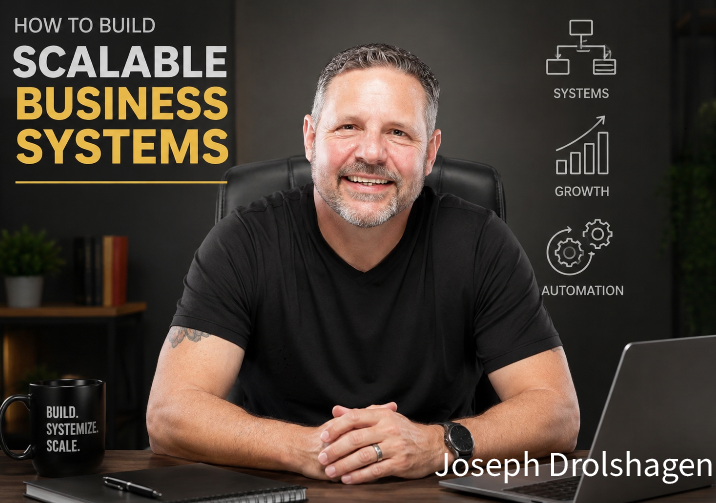
Joseph Drolshagen, founder of IFGT Coaching & Consulting™, approaches business growth by examining both the practical challenges entrepreneurs face and the mindset patterns that can influence their decisions. Through his SMT Method™, he focuses on addressing underlying performance barriers alongside the changes needed to support business development.
For established entrepreneurs and founders, the objective is not simply to work harder. Instead, it is to develop the leadership, systems, and strategic direction required to grow sustainably.
Contents
- What Is a Strategy Coach?
- Why Growing Businesses Need Strategic Coaching
- Five Signs Your Business Needs a Strategy Coach
- How Business Strategy Coaching Supports Sustainable Growth
- The Role of the SMT Method™ in Business Growth
- How to Choose the Right Business Strategy Coach
- Frequently Asked Questions
- Key Takeaways
What Is a Strategy Coach?
A strategy coach helps business owners evaluate their current position, clarify their objectives, and determine the actions needed to reach their goals. Unlike advice that focuses on a single problem, business strategy coaching considers how leadership, operations, revenue, people, and long-term planning work together.
For example, a company may attract enough customers but struggle to deliver its services consistently. Another business may have a talented team but lack clear responsibilities or effective management processes. In both situations, increasing marketing activity alone may not solve the underlying problem.
A business strategy coach helps the owner examine the bigger picture, identify constraints, and prioritize improvements.
Depending on the business, coaching may address:
- Revenue growth and profitability.
- Leadership development and decision-making.
- Team accountability and communication.
- Operational efficiency and scalable systems.
- Business goals, priorities, and execution.
- Mindset patterns that interfere with performance.
However, coaching is not the same as hiring a consultant to implement every business change. A coach may guide decisions, challenge assumptions, and support accountability, while the owner and team remain responsible for executing the plan.
Why Growing Businesses Need Strategic Coaching
In the early stages of a business, the founder often handles sales, customer service, operations, and important decisions personally. Initially, this approach may work. As the company grows, however, the same habits can become obstacles.
Consequently, a business that once depended on the founder’s personal effort may reach a point where additional hours no longer produce meaningful progress.
Strategic coaching helps entrepreneurs examine whether their current approach can support their next stage of growth.
Consider three common situations.
First, revenue has stopped increasing. The business may have reached its current customer capacity, pricing may need review, or sales processes may be inconsistent.
Second, the owner has become the bottleneck. Employees wait for approvals, routine decisions require the founder’s involvement, and progress slows whenever the owner is unavailable.
Third, the business lacks a clear growth plan. New ideas arrive constantly, but the team has difficulty deciding which opportunities deserve attention.
Rather than treating these problems separately, a strategy coach helps connect them to the company’s broader objectives.
For additional context on Joseph’s approach, visit the business coaching and consulting services offered by IFGT Coaching & Consulting™.
Five Signs Your Business Needs a Strategy Coach
Recognizing a growth problem early can help an entrepreneur make more informed decisions. The following signs suggest that structured strategic coaching may be worth considering.
1. Revenue Has Reached a Ceiling
Your business may generate consistent income without making meaningful progress toward the next target. Before pursuing more customers, examine pricing, customer retention, conversion rates, margins, and delivery capacity.
A clear diagnosis helps determine whether the priority is generating demand or improving the business model.
2. Every Important Decision Depends on You
If employees cannot move forward without your approval, the business may lack clear decision-making authority. Establishing responsibilities, processes, and measurable expectations can reduce unnecessary dependence on the founder.
3. Your Team Is Busy but Results Are Inconsistent
Activity does not always translate into performance. Therefore, leaders need to understand which activities contribute to the company’s objectives and which consume resources without producing sufficient value.
4. You Keep Changing Direction
Constantly switching strategies can make it difficult to measure progress. A defined plan, supported by realistic milestones and regular reviews, helps business owners distinguish between a genuine need to adapt and a temporary distraction.
5. Business Success Is Coming at a Personal Cost
Growth should not automatically mean longer working hours and greater stress. If the company requires the owner to be available at all times, its systems may need to change before further expansion becomes practical.
These challenges often overlap. For that reason, effective strategic coaching should examine the relationships between leadership, mindset, execution, and business structure rather than focus exclusively on one symptom.
How Business Strategy Coaching Supports Sustainable Growth
Business strategy coaching becomes most useful when it leads to clear decisions and consistent action. Although every company has different needs, a structured approach can include several stages.
Assess the Current Business
Begin by examining the company’s performance. Review revenue trends, profitability, customer acquisition, retention, operating costs, team capacity, and delivery processes.
The purpose is to establish a realistic starting point. Without reliable information, business owners may mistake assumptions for facts.
Identify the Main Growth Constraint
Next, determine which problem is limiting progress most significantly. For one company, the constraint may be inconsistent sales. For another, it may be weak delegation, limited capacity, or unclear positioning.
Prioritizing the most important constraint prevents the team from spreading its resources across too many initiatives.
Establish Measurable Priorities
Once the problem is clear, translate the desired outcome into specific objectives. For example, a business might aim to improve its sales conversion rate, reduce delivery delays, or shorten the time required to onboard a new employee.
These measures should reflect the company’s actual circumstances rather than arbitrary targets.
Build Systems and Accountability
After setting priorities, assign responsibilities, define deadlines, and establish a regular review process. This allows the team to identify obstacles, monitor progress, and make adjustments when the evidence supports them.
Finally, evaluate the results. Sustainable growth is not achieved through a plan alone; it requires learning from execution and improving the approach over time.
For a broader understanding of Joseph’s background and coaching philosophy, explore the About Joseph Drolshagen page.
The Role of the SMT Method™ in Business Growth
Business strategy involves more than spreadsheets, targets, and operational plans. Leadership behavior and personal decision-making also influence how effectively a strategy is carried out.
For example, an entrepreneur may understand the importance of delegation but continue to control every task. Another may recognize a promising opportunity yet repeatedly delay making a decision because of uncertainty or fear of failure.
These situations illustrate why mindset and execution can be closely connected.
Joseph Drolshagen developed the SMT Method™ as part of his approach to mindset and performance. Through IFGT Coaching & Consulting™, his coaching combines attention to underlying mental patterns with a focus on performance, leadership, and growth.
In practical terms, this approach encourages entrepreneurs to examine the beliefs and habits that may affect their decisions, then work toward behaviors that better support their goals.
Nevertheless, mindset work should complement sound business analysis, not replace it. A company experiencing declining profits still needs to examine its costs, market position, pricing, and customer demand.
When personal development and practical strategy work together, business owners can approach challenges with greater clarity while remaining accountable for measurable business outcomes.
How to Choose the Right Business Strategy Coach
Not every coach uses the same methods, serves the same audience, or provides the same level of support. Therefore, choosing the right professional requires more than comparing websites or marketing promises.
Start by identifying your main objective. Are you trying to increase revenue, develop stronger managers, improve operational systems, or overcome a recurring leadership challenge?
Next, examine the coach’s relevant experience, methodology, service structure, and approach to measuring progress. Ask how sessions are organized, what preparation is expected, and how coaching connects to your actual business priorities.
It can also help to compare different coaching approaches. For example, Strategic Coach offers an entrepreneurial coaching and education approach, while OnStrategy discusses strategic planning and execution support.
These resources illustrate that strategic coaching and planning services can differ in their emphasis. They should not be assumed to offer identical methods or outcomes.
Searches such as “strategic coaching for entrepreneurs,” “business strategy coach,” and “strategic coaches near me” can help you explore options. You may also encounter searches for Dan Sullivan’s Strategic Coach programs or YouTube strategic coach videos. When researching these resources, distinguish between general educational content, structured coaching programs, and individualized support.
Ultimately, choose a coach whose approach fits your goals, whose claims can be evaluated, and whose working style supports meaningful action.
FAQ
What does a strategy coach do?
A strategy coach helps business owners clarify objectives, identify barriers to growth, prioritize decisions, and develop actionable plans. Depending on the engagement, coaching may also address leadership, accountability, team performance, and execution.
How is a business strategy coach different from a business consultant?
A business strategy coach typically guides the owner’s thinking, decisions, and accountability. A consultant may be engaged to analyze a problem and recommend or implement specific solutions. Some professionals combine elements of both approaches, so it is important to confirm the actual scope of service.
Who should hire a strategy coach in the USA?
Established entrepreneurs, founders, executives, and small or large business owners may benefit when they face recurring growth constraints, leadership challenges, unclear priorities, or difficulties scaling operations. The right fit depends on the company’s needs and the coach’s expertise.
Can strategic coaching help a business break through a revenue ceiling?
It can help owners investigate potential causes, including pricing, sales conversion, customer retention, operational capacity, and leadership bottlenecks. Results depend on the circumstances, the quality of the strategy, and how consistently the business implements and evaluates changes.
What is the SMT Method™?
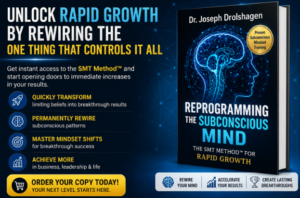
The SMT Method™ is Joseph Drolshagen’s named approach to subconscious mindset training and performance improvement. It focuses on addressing underlying patterns that may influence behavior and results. Business owners considering the method should discuss how it applies to their individual objectives and how progress will be evaluated.
How do I choose between strategic coaching programs?
Compare the program’s focus, coach experience, delivery format, costs, accountability structure, and suitability for your business stage. Ask what support is included and avoid assuming that a particular program will guarantee revenue growth.
Is strategic coaching worth the investment?
Strategic coaching may be worthwhile when the cost is proportionate to the problem being addressed and the business has clear objectives for the engagement. Before committing, identify the outcomes you want to improve and agree on how progress will be reviewed.
8. Key Takeaways

- A strategy coach helps clarify direction: Business owners can use coaching to identify constraints and prioritize growth opportunities.
- Sustainable growth requires systems: Strong teams, clear responsibilities, reliable processes, and measurable objectives reduce unnecessary dependence on the founder.
- Revenue problems need diagnosis: More marketing or longer working hours will not necessarily solve pricing, conversion, capacity, or leadership issues.
- Mindset and execution work together: Joseph Drolshagen’s SMT Method™ focuses on mindset and performance as part of his broader coaching approach.
- Choose coaching based on fit: Evaluate experience, methodology, service scope, and realistic measures of progress before making a commitment.
For entrepreneurs ready to examine what is limiting their next stage of growth, the first step is to understand the business as it operates today. From there, a clear strategy can help connect leadership decisions, team performance, and operational priorities to the outcomes that matter most.
Joseph Drolshagen and IFGT Coaching & Consulting™ work with entrepreneurs and business owners on mindset, leadership, and growth challenges. To explore the approach and determine whether it fits your goals, visit the business coaching services page.